
Our Impacts are Measurable
The No Hunger Food Bank’s (NHFB), objective are based on three strategic pillars
- Food Banking
- Empowerment
- Policy Support
NHFB deploys food banking models to source food while leveraging circularity and environmental sustainability principles to reduce food loss and waste on farms and at home. At No Hunger Food Bank, we are committed to eradicating hunger by partnering with local and international organizations, farmers etc. to rescue surplus food from waste. We engage our communities and food value chain actors, inspiring and empowering individuals and families to work toward hunger-free communities. We prioritize compassion, integrity, collaboration, empowerment, sustainability, and inclusivity.
Using Evidence Based Research and Programmes
No Hunger Food Bank is dedicated to developing evidence-based research that improve people’s lives and strengthen communities.
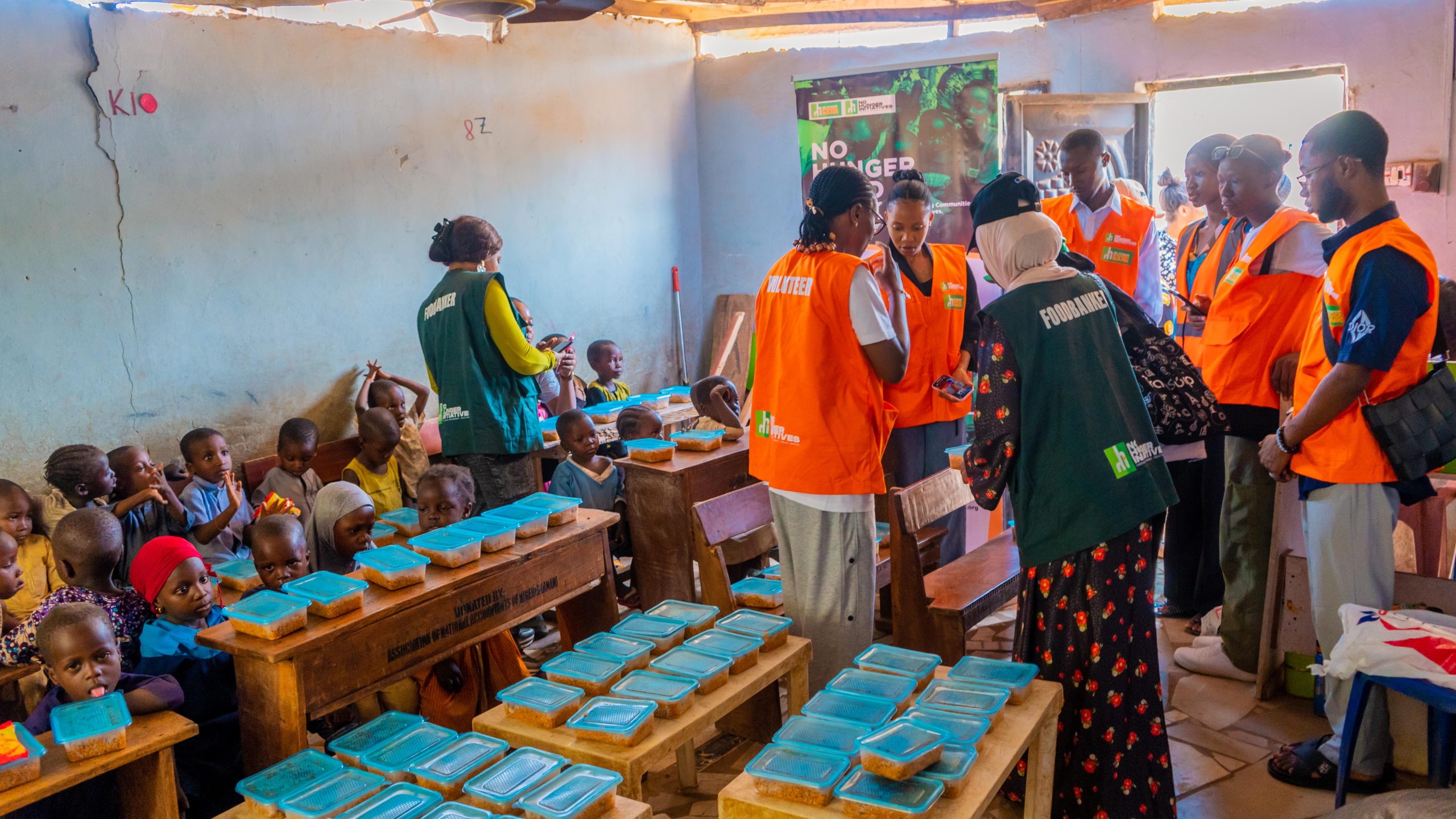
Providing food and nutrition security interventions to under-resourced communities
NHFB recovers and redistributes surplus food to vulnerable populations, particularly those in Internally Displaced Persons (IDP) camps, under-resourced and marginalized communities across Nigeria. Since 2019, NHFB has rescued over 498,200kg of food and supported more than 36,200 households across Nigeria. Through programmes such as the Temporary Food Assistance Programme (TFAP), CSFRIEND, Community Breakfast, Empowering Communities, Support A Girl Child Back to School, among others, NHFB has provided meals to over 66,500 vulnerable children, supported by more than 96,000 hours of volunteer service. NHFB has collaborated with partners including the Department of State through the United States Embassy in Nigeria, Australian High Commission, Sony Music, Jumia Foods, Glovo Nigeria, Jabi Lake Mall, National Open University of Nigeria, Federal Ministry of Women Affairs, among others, and is recognized as one of the leading hunger-relief organizations in Nigeria.
Why Partner With NHFB
- Our impacts are measurable
- We have strict due diligence, monitoring and standard operating procedures that ensures food reaches the intended beneficiaries.
- Our Food Banking model is cost-effective, innovative and sustainable.
- Our food is a catalyst for social impact in under-served communities.
- At least 100% of our partner agencies or beneficiary organizations focus on education, vulnerable children, women, and youth. More than 85% of the food we provide is nutritious
- Our Food Banking Model promotes 12 of the 17 Sustainable Development Goals and is environmentally friendly.
- We have an army of dedicated and compassionate volunteers
- We’ve used research and practical learning to improve our approach