At No Hunger Food Bank, we confront food insecurity and hunger daily through our work in northern Nigeria and vulnerable communities. These crises stem from multiple, deeply interconnected factors. Poverty traps families in cycles where they cannot afford adequate nutrition, even when food is nearby. Armed conflict like the Boko Haram insurgency driving displacement to Durumi and Karon Majigi camps in Abuja, increasing the number of beneficiaries that depend on our services . Climate shocks, including Sokoto State’s erratic rainfall patterns, devastate crops just as our teams rescue surplus produce from farmers like Aliyu Muazu.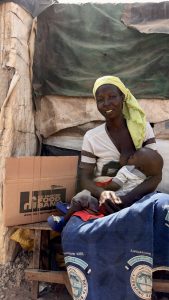
These challenges are worsened by chronic underinvestment in agriculture, leaving smallholders without irrigation, seeds, or storage we help provide through targeted interventions. Unstable markets compound the problem, with volatile prices preventing families from planning reliable meals, precisely why our rapid food rescue operations deliver 4,520 kg of recovered produce directly to camps within 24 hours, transforming waste into hope.
Our mission directly addresses this complex web: rescuing perishables others cannot handle, equipping displaced households with backyard farming tools for self-reliance, and building resilient local food systems that break hunger’s grip where systemic failures persist.

Goal 2 of the Sustainable Development Goals (SDGs), adopted in 2015, aims to “end hunger, achieve food security and improved nutrition, and promote sustainable agriculture” by 2030. Yet current data show the world is off‑track, and Africa remains the most affected region. According to the latest State of Food Security and Nutrition in the World (SOFI) reports, between 713 and 757 million people were affected by hunger globally in 2023, about 9.1% of the world’s population, up from 7.5% in 2019. In 2024, the midpoint estimate is 673 million people facing hunger, still well above pre‑COVID levels. Food insecurity is even more widespread: about 2.33 billion people, almost 3 in 10 globally, experienced moderate or severe food insecurity in 2023.
Africa continues to bear a disproportionate share of this burden. In 2023, roughly one in five people in Africa faced hunger, and about 58% of the population was moderately or severely food insecure. Sub‑Saharan Africa has the highest level of undernourishment of any world region, with an undernourishment rate of around 21–22% in 2020–2022, up from about 16–17% a decade earlier. FAO’s 2023 updates show that in sub‑Saharan Africa the prevalence of hunger increased from 22.2% to 22.5% between 2021 and 2022, adding about 9 million more undernourished people in just one year.
In absolute terms, the number of undernourished people in Africa has risen sharply. Recent UN and FAO estimates indicate that over 300 million people in Africa faced hunger in 2024, with about 307 million affected in that year alone. Projections are sobering: if current trends continue, more than half of the 582 million people expected to be chronically undernourished in 2030 will live in Africa, effectively bringing the world back to 2015 levels when the SDGs were adopted.
Asia still has the largest number of undernourished people in absolute terms, but this largely reflects its much larger population base, whereas Africa now has the highest regional prevalence rates and the fastest deterioration. This means that, despite SDG 2’s ambition, hunger and malnutrition in Africa have not only persisted but, in many places, have worsened, driven by conflict, climate shocks, economic crises, and rising food prices.
We need your help
Make an immediate impact by giving to No Hunger Food Bank. Financial contributions help us reach even more people in Abuja vulnerable communities and northern Nigeria where we serve. Your donation will go toward the area of greatest need, which includes supporting our Temporary Food Assistance Program (TFAP), Support A Girl Child Back To School, community empowerment, direct school feeding programs, and other life-changing programs.

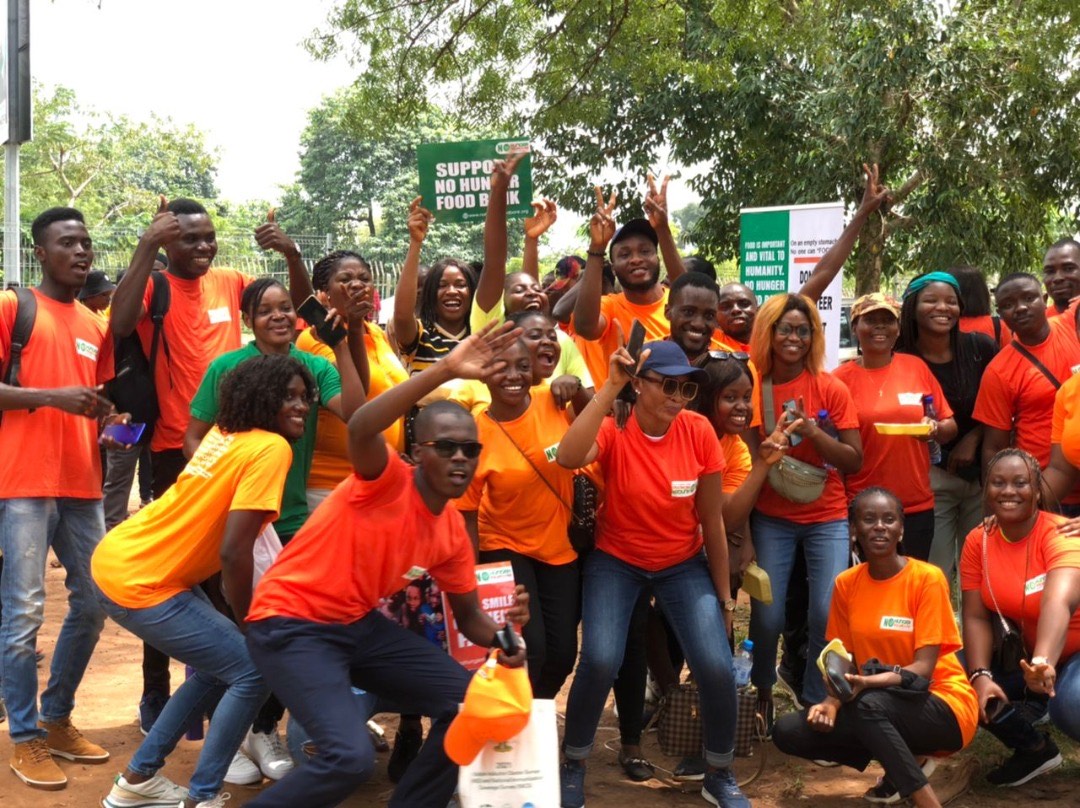
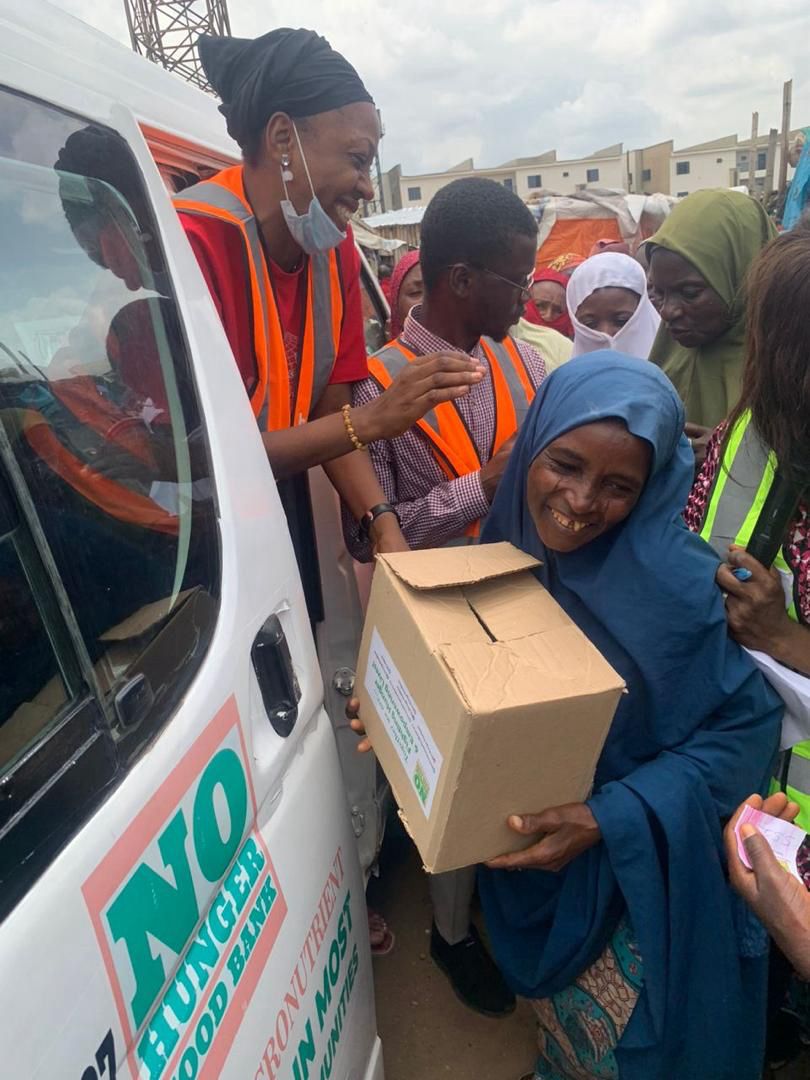


At No Hunger Food Bank, we confront food insecurity and hunger daily through our work in northern Nigeria and vulnerable communities. These crises stem from multiple, deeply interconnected factors. Poverty traps families in cycles where they cannot afford adequate nutrition, even when food is nearby. Armed conflict like the Boko Haram insurgency driving displacement to Durumi and Karon Majigi camps in Abuja, increasing the number of beneficiaries that depend on our services . Climate shocks, including Sokoto State’s erratic rainfall patterns, devastate crops just as our teams rescue surplus produce from farmers like Aliyu Muazu.
These challenges are worsened by chronic underinvestment in agriculture, leaving smallholders without irrigation, seeds, or storage we help provide through targeted interventions. Unstable markets compound the problem, with volatile prices preventing families from planning reliable meals, precisely why our rapid food rescue operations deliver 4,520 kg of recovered produce directly to camps within 24 hours, transforming waste into hope.
Our mission directly addresses this complex web: rescuing perishables others cannot handle, equipping displaced households with backyard farming tools for self-reliance, and building resilient local food systems that break hunger’s grip where systemic failures persist.
Goal 2 of the Sustainable Development Goals (SDGs), adopted in 2015, aims to “end hunger, achieve food security and improved nutrition, and promote sustainable agriculture” by 2030. Yet current data show the world is off‑track, and Africa remains the most affected region. According to the latest State of Food Security and Nutrition in the World (SOFI) reports, between 713 and 757 million people were affected by hunger globally in 2023, about 9.1% of the world’s population, up from 7.5% in 2019. In 2024, the midpoint estimate is 673 million people facing hunger, still well above pre‑COVID levels. Food insecurity is even more widespread: about 2.33 billion people, almost 3 in 10 globally, experienced moderate or severe food insecurity in 2023.
Africa continues to bear a disproportionate share of this burden. In 2023, roughly one in five people in Africa faced hunger, and about 58% of the population was moderately or severely food insecure. Sub‑Saharan Africa has the highest level of undernourishment of any world region, with an undernourishment rate of around 21–22% in 2020–2022, up from about 16–17% a decade earlier. FAO’s 2023 updates show that in sub‑Saharan Africa the prevalence of hunger increased from 22.2% to 22.5% between 2021 and 2022, adding about 9 million more undernourished people in just one year.
In absolute terms, the number of undernourished people in Africa has risen sharply. Recent UN and FAO estimates indicate that over 300 million people in Africa faced hunger in 2024, with about 307 million affected in that year alone. Projections are sobering: if current trends continue, more than half of the 582 million people expected to be chronically undernourished in 2030 will live in Africa, effectively bringing the world back to 2015 levels when the SDGs were adopted.
Asia still has the largest number of undernourished people in absolute terms, but this largely reflects its much larger population base, whereas Africa now has the highest regional prevalence rates and the fastest deterioration. This means that, despite SDG 2’s ambition, hunger and malnutrition in Africa have not only persisted but, in many places, have worsened, driven by conflict, climate shocks, economic crises, and rising food prices.
We need your help
Make an immediate impact by giving to No Hunger Food Bank. Financial contributions help us reach even more people in Abuja vulnerable communities and northern Nigeria where we serve. Your donation will go toward the area of greatest need, which includes supporting our Temporary Food Assistance Program (TFAP), Support A Girl Child Back To School, community empowerment, direct school feeding programs, and other life-changing programs.